Pablo Rodríguez, Ph.D. — Computer Scientist & Research Leader
Internet systems · Privacy · Trusted AI
Pablo Rodríguez, Ph.D. — Computer Scientist & Research Leader
Principal Engineer, Google Office of the CTO
Ph.D., EPFL ACM Fellow IEEE Fellow
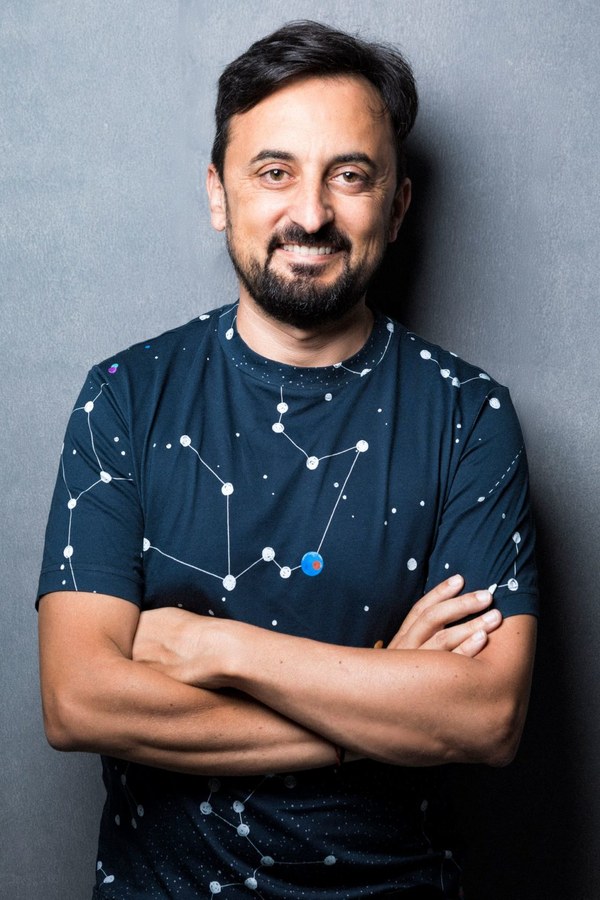
My research focuses on the architecture of scalable Internet systems and the principles that protect the people who rely on them. Across my career, I connect distributed systems, privacy, and trustworthy AI with institutional stewardship and public-interest technology.
Research & public service
Scaling Internet systems
My research spans Web caching, peer-to-peer distribution and Internet measurement. At Microsoft Research, I co-developed Avalanche, using network coding to make large-scale content distribution more efficient. Our network-coding paper (2005) received the IEEE INFOCOM Test of Time Award in 2017; our YouTube measurement study (2007) received the ACM IMC Test of Time Award in 2022.
Privacy & Trusted Computing
I co-founded the Data Transparency Lab to support open-source privacy research. During COVID-19, I led the technical architecture of Spain’s exposure notification program and directed the La Gomera contact-detection experiment, published in Nature Communications. I build privacy into systems, from mcTLS, which controls intermediaries’ access to encrypted communications, to confidential AI.
Building research institutions
Telefónica Research
I directed and established Telefónica’s Research laboratory, creating opportunities for researchers to pursue their work in Southern Europe. By 2011, the laboratory brought together 20 researchers and hosted around 40 doctoral interns and visitors annually.
Explore the laboratory’s research
Data Transparency Lab
I co-founded DTL, a collaboration between Telefónica, MIT, Mozilla and the Open Data Institute that funded independent university research on privacy. By 2017, it reported more than €1 million invested in applications and programmes, including academic research grants. Supported work included ReCon, presented at the US FTC’s PrivacyCon, and UC3M’s FDVT, used in research on sensitive-data profiling and EU GDPR compliance.
Open-source projects · Programme and funding record
Alpha
As founding CEO of Alpha, Telefónica’s moonshot laboratory, I built teams working on long-term challenges in mental health and affordable energy. Its health programme later became Koa Health. This work explored how scientific research could become practical technology for problems that affect people’s daily lives.
Reflections on building a moonshot laboratory
Community
I grew up in Langreo, in the mining region of Asturias. A European research fellowship made my Ph.D. possible. That experience shaped my commitment to helping others find research opportunities, professional networks and paths into international science.
Alongside mentoring and recruiting researchers, I served on the ACM Europe Fellows Working Group, supporting European researchers’ professional recognition. I also initiated Telefónica’s Next Things collaboration with LABoral, bringing artists and technologists together through research residencies.
Selected publications
Over 200 publications. Google Scholar: h-index 69; 18,656 citations.
Metrics checked 4 October 2026 · Current record
- Network Coding for Large Scale Content DistributionC. Gkantsidis and P. Rodríguez · IEEE INFOCOM, 2005
IEEE INFOCOM Test of Time Award, 2017 - I Tube, You Tube, Everybody Tubes: Analyzing the World’s Largest User Generated Content Video SystemM. Cha, H. Kwak, P. Rodríguez, Y.-Y. Ahn and S. Moon · ACM IMC, 2007
ACM IMC Test of Time Award, 2022 - Multi-Context TLS (mcTLS): Enabling Secure In-Network Functionality in TLSD. Naylor et al. · ACM SIGCOMM, 2015
- A population-based controlled experiment assessing the epidemiological impact of digital contact tracingP. Rodríguez et al. · Nature Communications 12, 587 (2021) — First author
Contact-detection study using simulated infections in La Gomera. - Analysis of Web Caching Architectures: Hierarchical and Distributed CachingP. Rodríguez, C. Spanner and E. W. Biersack · IEEE/ACM Transactions on Networking 9(4), 2001
- Confidential Analytic & AIP. Rodríguez and A. Santhanagopalan · Google Research white paper, 2024
